Uncategorized

AI Analytics
Uncategorized

AI Analytics Tools Every Marketer Should Use in 2025.

AI Analytics Tools Every Marketer Should Use in 2025. Introduction : Why AI Analytics Tools Matter in 2025 AI analytics tools every marketer should use in 2025 are fundamentally changing how brands track, interpret, and improve digital campaigns. With more data available than ever, these tools empower marketers to automate complex reporting, predict trends, and optimize strategies with precision. If growth, efficiency, and ROI are business priorities this year, adopting the right AI analytics tools is essential for staying ahead. 1. Google Analytics 4 (GA4) Google Analytics 4 is an AI-powered analytics platform that brings predictive metrics to marketers in 2025. GA4 automatically surfaces actionable insights about customer journeys, conversion probabilities, and audience segments. With machine learning at its core, GA4 helps marketers move from descriptive reporting to proactive, data-driven decision making. 2. Whatagraph Whatagraph is an automation-driven reporting platform designed for agencies and in-house teams. Its AI engine gathers data from all major channels, builds interactive dashboards, and offers instant summaries. With AI chatbots for custom queries and scheduled reports, marketers see exactly what’s driving results across PPC, SEO, email, and social. 3. AgencyAnalytics AgencyAnalytics is an AI analytics tool every marketer should use in 2025 for unified reporting. With over 80 integrations, AI summaries, trend detection, and customizable widgets, it removes the guesswork from multi-channel campaign tracking. White-label dashboards help agencies clearly show clients their marketing impact. 4. SEMrush SEMrush is more than a classic SEO tool—it now uses AI for advanced keyword research, backlink analysis, site audits, and competitor tracking. Its smart automation features identify ranking opportunities and benchmark your site’s performance against competitors. 5. Mixpanel Mixpanel’s AI-powered platform excels in customer journey and product analytics. Marketers use its segmentation, funnel visualization, and predictive features to optimize path-to-purchase and boost retention. Its recent AI upgrades forecast campaign performance and spot friction points in real time. 6. TapClicks TapClicks uses AI to clean, aggregate, and visualize huge sets of marketing data. Designed for marketing teams and agencies, it recommends optimizations and highlights anomalies, so teams can act fast. TapClicks scales easily for multiple brands or large enterprise accounts. 7. Tableau Tableau is a leading data visualization tool that now integrates AI-powered dashboards and predictive analytics. Marketers leverage its real-time reporting and user-friendly interface to explore, present, and share actionable insights across the organization. 8. Improvado Improvado streamlines data aggregation for marketers using AI. By automating data collection from dozens of sources, cleaning, and blending it, Improvado lets teams focus on interpretation fueling better content, ad, and budget decisions. 9. Hootsuite Hootsuite is a social media analytics leader. Its AI-driven insights track audience sentiment, identify engagement spikes, and recommend optimal posting times. Marketers use Hootsuite to manage social channels, automate reports, and improve campaign results. 10. HubSpot HubSpot adds AI analytics to CRM, campaign reporting, and lead nurturing workflows. Predictive scoring, smart segmentation, and automated dashboards save marketers hours each week, while helping teams move faster and personalize outreach based on real data. AI Analytics Trends in 2025 Predictive Insights: Tools now forecast customer actions and campaign outcomes automatically. Real-Time Dashboards: Marketers react quickly as analytics update instantly across platforms. Natural Language Reporting: AI systems summarize data in plain English, making insights accessible. Integrated Automation: Reporting, trend identification, and recommendations are built-in, not just add-ons. Conclusion AI analytics tools every marketer should use in 2025 are revolutionizing how digital performance is measured, optimized, and scaled. Marrying deep data integrations with predictive modeling and automation, these platforms help businesses achieve higher ROI, sustainable growth, and smarter decisions across every marketing channel.  
Ai tools , best ai tools for marketing , digital marketing , best ai tools for digital marketing
Uncategorized

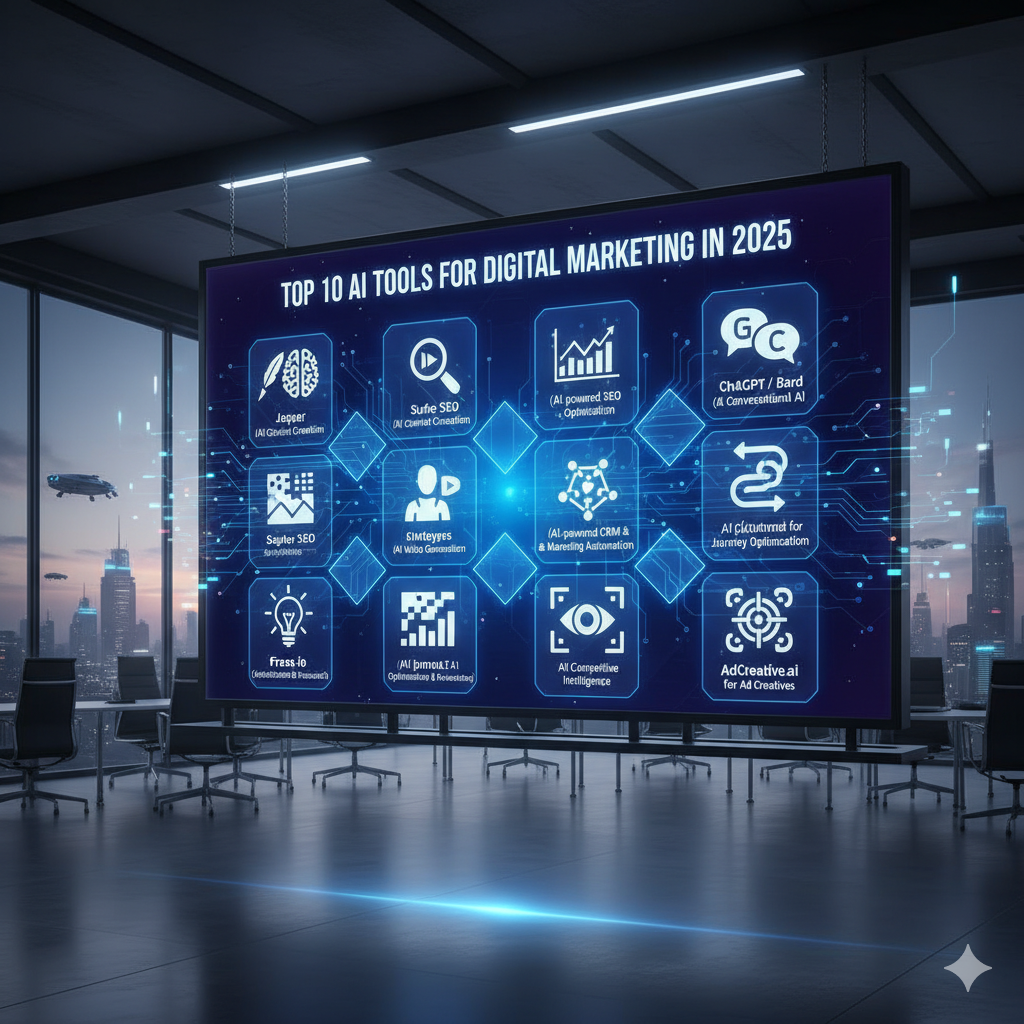
TOP 10 AI Tools for Digital Marketing in 2025.

TOP 10 AI Tools for Digital Marketing in 2025. Artificial intelligence is revolutionizing digital marketing by making campaigns smarter, faster, and more efficient. Here are the top 10 AI tools every digital marketer should consider using in 2025 1. Jasper AI A leading AI copywriting tool, Jasper (formerly Jarvis) helps marketers generate persuasive ad copy, blog posts, product descriptions, and email campaigns. It uses templates and natural language processing to produce high-quality content quickly, saving time and boosting productivity. 2. Surfer SEO This tool optimizes website content to improve search engine rankings. Surfer SEO analyzes top-ranking pages for your keywords and provides actionable recommendations, from keyword usage to content structure, helping you enhance both on-page and technical SEO. 3. Grammarly Essential for any content marketer, Grammarly enhances writing by correcting grammar, spelling, and punctuation errors. Its AI-driven suggestions go beyond simple corrections, improving clarity and ensuring professional, engaging copy for blogs, emails, and social posts. 4. ChatGPT OpenAI’s ChatGPT is widely used for content ideas, drafting briefs, social media posts, email replies, and chatbot scripts. Its ability to generate creative text and answer questions makes it a versatile tool for marketers seeking inspiration and support for messaging and planning. 5. Zapier Zapier is an automation tool that connects your marketing apps and platforms. Its AI-powered workflows save time by automating repetitive tasks, from posting social content to syncing leads allowing marketers to focus on strategy and creative work. 6. Buffer Buffer uses AI to help businesses schedule, publish, and analyze social media content across multiple platforms. Its AI Assistant suggests the best times to post and generates engaging captions to maximize reach and engagement. 7. Lexica Art Lexica is an AI image generator that creates stunning, realistic images for blogs, ads, and social media posts. Marketers use it to generate unique thumbnails, illustrations, or product visuals, offering an alternative to traditional stock photography. 8. Loomly A comprehensive social media management tool, Loomly leverages AI for content scheduling, strategy planning, and performance analytics. Its intuitive calendar and approval workflows help marketing teams stay organized and efficient. 9. Seventh Sense Focused on optimizing email marketing, Seventh Sense uses AI to analyze user engagement and determine the perfect timing for each email, increasing open rates and conversions. It seamlessly integrates with platforms like HubSpot and Marketo. 10. Brand24 Brand24 is an AI-powered media monitoring tool. It tracks brand mentions, analyzes sentiment, and highlights trends across web, news, and social media. This enables marketers to respond quickly to feedback, manage brand reputation, and stay ahead of the competition Conclusion Incorporating AI tools into digital marketing is more crucial than ever in 2025. These top 10 tools help automate, optimize, and personalize every step—ensuring campaigns are smarter, more creative, and generate stronger results. Start exploring these platforms to elevate your marketing strategy today.

Uncategorized

Why You Should Do SEO For Your Business ??​

Why You Need SEO For Your Business ?? Introduction In the digital age SEO is  very important for business whether a local store, a growing startup, or a large enterprise competes for attention online. Search Engine Optimization (SEO) isn’t just another marketing buzzword it’s a fundamental strategy that helps any business grow, stand out, and thrive in today’s competitive marketplace .  1. Increased Visibility & Qualified Traffic . SEO ensures your website ranks higher on search engines like Google when users look for products or services you offer. This visibility drives qualified organic traffic to your business because people actively searching for your offerings are more likely to engage and convert into customers. Unlike paid ads, SEO traffic is consistent and grows over time without continuous investment .  2. Building Trust and Credibility Websites that rank on the first page of search results are perceived as more credible and trustworthy. SEO builds this trust by ensuring your website is secure, loads quickly, and delivers valuable content. These trust signals not only help search engine rankings but also reassure visitors they are dealing with a reputable business. 3.Cost-Effective Marketing Unlike paid advertising, SEO provides a sustainable and cost-effective stream of traffic. Once your site is optimized, you keep attracting visitors even if you pause your ad campaigns. SEO targets users with active intent, meaning your marketing budget goes toward attracting people already interested in your business. 4.Better User Experience SEO is more than keywords. It involves optimizing your site’s structure, speed, and mobile-friendliness to deliver a smooth user experience. Sites that are easy to navigate and load quickly are favored by search engines and by users, leading to higher engagement and lower bounce rates .  5.Higher Conversion Rates Optimized web pages attract visitors ready to buy or inquire. SEO allows your content to match all stages of the buyer journey, from research to decision, resulting in improved conversion rates and shorter sales cycles . 6.Competitive Advantage A strong SEO strategy helps your business outrank competitors in search results. This leads to a larger market share, increased brand recognition, and authority in your industry, which compounds as you continue to invest in SEO. 7.Insights Into Customer Behavior SEO analytics tools provide deep insights into what users search for, how they interact with your website, and what drives their decisions. This valuable data helps tailor your marketing strategies and enhances your understanding of customer needs for even better results. 8.Insights Into Customer Behavior SEO keeps your business agile and adaptable to changes in consumer search trends and search engine algorithms. Staying updated with SEO best practices ensures ongoing relevance and resilience in a fast-changing digital landscape. 9. Local and Global Reach SEO helps businesses target local customers through local search optimization crucial for brick-and-mortar stores. Simultaneously, it enables brands to achieve broader, even international, visibility with strategic keyword targeting. 10. Sustainable Long-Term Growth SEO is a long-term play. While paid campaigns give instant results, they stop providing traffic as soon as you stop paying. SEO delivers compounding benefits: regular updates and content improvements help you sustain online growth month after month. Conclusion Investing in SEO is essential for business success in 2025 and beyond. It boosts visibility, credibility, and sales while providing a measurable, cost-effective return on investment. Whether you run a local business or a global brand, SEO is the foundation for digital growth, customer trust, and long-term resilience. Start optimizing now your future customers are searching.

Uncategorized

AI & Hyper-Personalisation are Changing Digital Marketing 

How AI & Hyper-Personalisation are Changing Digital Marketing in India . Introduction India’s digital marketing landscape is experiencing a seismic transformation. As brands compete for attention in a vast, diverse, and rapidly digitising market, Artificial Intelligence (AI) and hyper-personalisation have emerged as powerful tools to elevate customer experiences, drive conversion, and foster loyalty. AI is no longer a futuristic buzzword but a pragmatic driver behind some of the most successful campaigns by Indian and international brands alike. From personalized recommendations to emotionally intelligent chatbots, the blend of AI with data-driven hyper-personalisation has made it possible to connect with Indian consumers in deeply meaningful ways. What is Hyper-Personalisation? Hyper-personalisation goes far beyond merely addressing a customer by name. It’s about creating marketing journeys in real time, uniquely tailored to each individual’s preferences, behavior, and context. Traditional marketing segmentation might target broad groups by age or location. Hyper-personalisation, however, leverages AI, machine learning, and vast quantities of data—covering browsing patterns, previous purchases, device types, and even the weather—to craft highly relevant interactions at the right moment and on the right channel. In India, where customers come from a multitude of linguistic, cultural, and economic backgrounds, hyper-personalisation enables brands to truly “localize” their engagement—whether it’s through vernacular language content, regional festival offers, or recommendations tailored to rural versus urban contexts.  AI is the engine that powers hyper-personalisation, automating the analysis of millions of data points and drawing actionable insights faster than humanly possible. Here’s how Indian businesses are using AI in digital marketing: Data Analysis at Scale: Indian enterprises use AI to deduce customer preferences by sifting through data from social media, purchases, search habits, and more. This allows for the construction of rich customer profiles and more accurate targeting than ever before. Real-Time Recommendations: E-commerce sites now deploy AI algorithms to recommend products instantly, based on live browsing behaviour, recent carts, and even likely future needs. Dynamic Content and Chatbots: AI-driven content generators and chatbots deliver personalized emails, ads, landing pages, and real-time support in customers’ preferred languages, including regional and vernacular media. Predictive Analytics: AI can predict not just what a customer wants today, but what they might want next week. For example, fintech platforms anticipate credit needs before a formal application, and OTT platforms suggest new shows based on nuanced viewing history .  Indian Case Studies and Real-World Examples India is a fertile ground for innovation in digital marketing. Here are some notable applications and results: E-commerce & Retail: Platforms like Flipkart and Amazon use AI-powered recommendation engines to build “one-of-a-kind” homepages for each user, reflecting recently viewed products, localities, ongoing festivals, and price sensitivity. Voice and Vernacular AI: Startups like Jio Haptik and Reverie have pioneered AI-driven voice search in Indian languages, making digital commerce accessible to previously underserved populations. BFSI (Banking, Financial Services, and Insurance): Hyper-personalised offers and credit scores are now delivered via AI analysis of transaction history, mobile top-ups, and repayment patterns. Customer Service: Companies like Meesho and Ixigo leverage AI chatbots and CRM systems to provide 24×7, hyper-personalised support, resulting in greater customer satisfaction and reduced operating costs. Cultural Intelligence: Marketing with Empathy. India’s diversity is both a challenge and an opportunity. AI not only processes language differences but is also capable of picking up on cultural cues, regional trends, and even emotional states. This ensures that a festive greeting in Tamil Nadu arrives in Tamil, mentioning Pongal—not Diwali, which would be regionally irrelevant. By respecting these nuances through AI-led hyper-personalisation, brands build trust and increase the likelihood of customer engagement. The Human Touch in an Automated World. With all this automation, where do humans fit in? Contrary to fears that AI will replace marketing jobs, Indian brands have found that AI frees up human creative capacity. Marketers now focus more on strategy, creative ideation, and refining AI’s outputs, rather than on tedious, repetitive tasks. The most effective campaigns blend the analytical power of AI with the empathy, imagination, and cultural sensitivity of human teams .  Data Privacy, Trust, and Ethics AI’s power comes with great responsibility. With stricter data privacy regulations like India’s Digital Personal Data Protection Act (DPDP), brands must prioritize ethical data usage and transparency. In the rush for personalisation, brands must ensure they use customer data wisely, gain consent, and explain clearly how that data will be used. This is not just a legal obligation—it’s vital for winning and maintaining consumer trust in the Indian context, where privacy awareness is on the rise. Future Trends: What Lies Ahead? By 2028, experts predict that over half of all customer interactions in India will be managed by AI-enabled systems, with hyper-personalised engagement as the industry standard across sectors. These innovations will move beyond commerce; think healthcare reminders, hyper-localized travel offers, education platforms guiding career decisions, and even regional influencer collaborations—each powered by AI’s understanding of context and intent. Additionally, generative AI tools will play a growing role in personalised content, creating everything from customised videos to real-time social media engagement, at a scale previously unimaginable. Conclusion AI-driven hyper-personalisation is revolutionizing digital marketing in India. It enables brands to engage not just more efficiently, but more meaningfully—with content, recommendations, and experiences that resonate on a uniquely individual level. The winners in this new landscape will be brands that combine cutting-edge technology with a deep respect for India’s rich human, linguistic, and cultural tapestry, always keeping trust and empathy at the heart of their strategies.

Scroll to Top